Some cities survive only in memory. Long after streets are destroyed, homes abandoned, and neighbours scattered, they continue to exist in the minds of the people who once walked them. For Khalid Abdelrahman, Khartoum has become that kind of place.
Born and raised in the Sudanese capital, Khalid has spent years painting its streets, houses and quiet corners. His landscapes are almost always empty of people, yet they feel unmistakably inhabited. A doorway left open. A shrine standing alone beneath the evening sky. A row of modest houses glowing in impossible colour. They are paintings about presence rather than absence, shaped by memory as much as observation. Since the outbreak of war forced him to leave Sudan in 2023, those familiar places have become something more than subjects. They have become acts of remembrance.
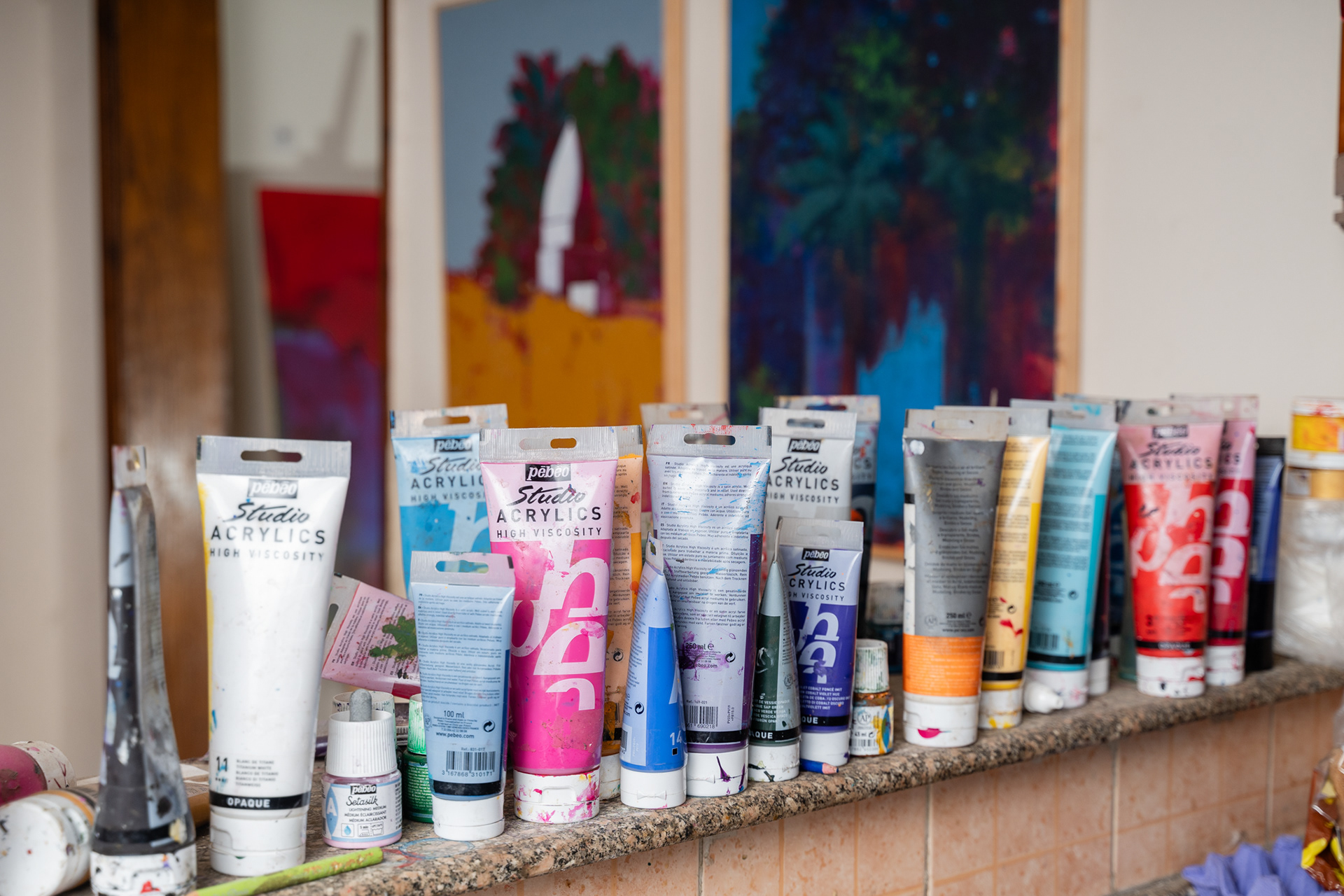
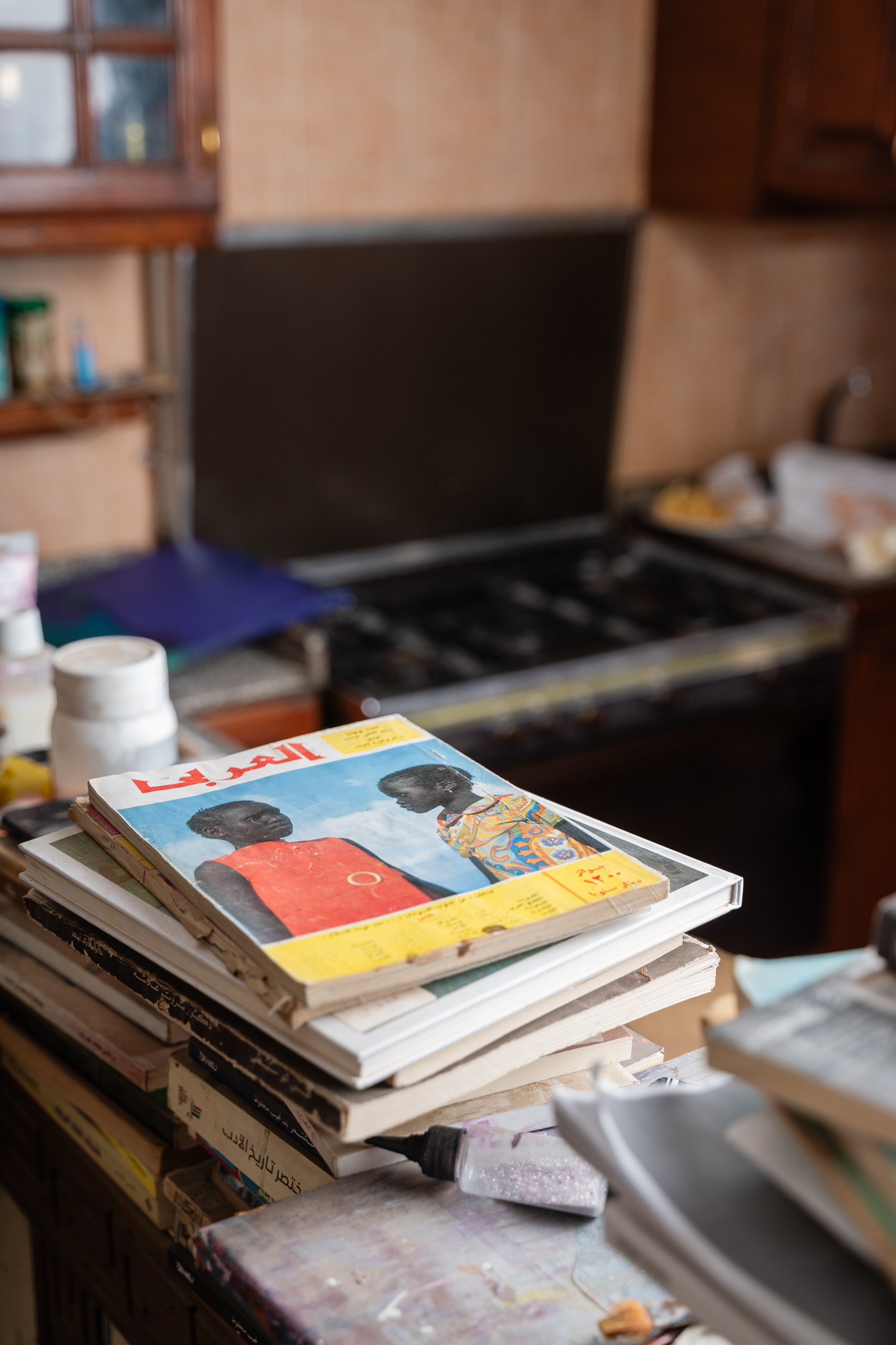
I photographed Khalid in the apartment where he now lives and works in Cairo. It is both home and studio, every wall occupied by canvases waiting to leave while new ones quietly take their place. His paintings fill the rooms with Sudan, not as documentation, but as a place carried forward through colour. Standing among them, it became difficult to separate the artist from the world he continues to build around himself. The home had become another canvas.
As an Egyptian of Sudanese heritage who has never seen Sudan for myself, I recognised something familiar in that distance. Much of what I know about the country has come through stories, photographs and conversations carried across generations. Khalid paints from a similar distance now, except the streets belong to his own memory. His work became another way of approaching a place that has always felt close, yet remained just beyond reach.
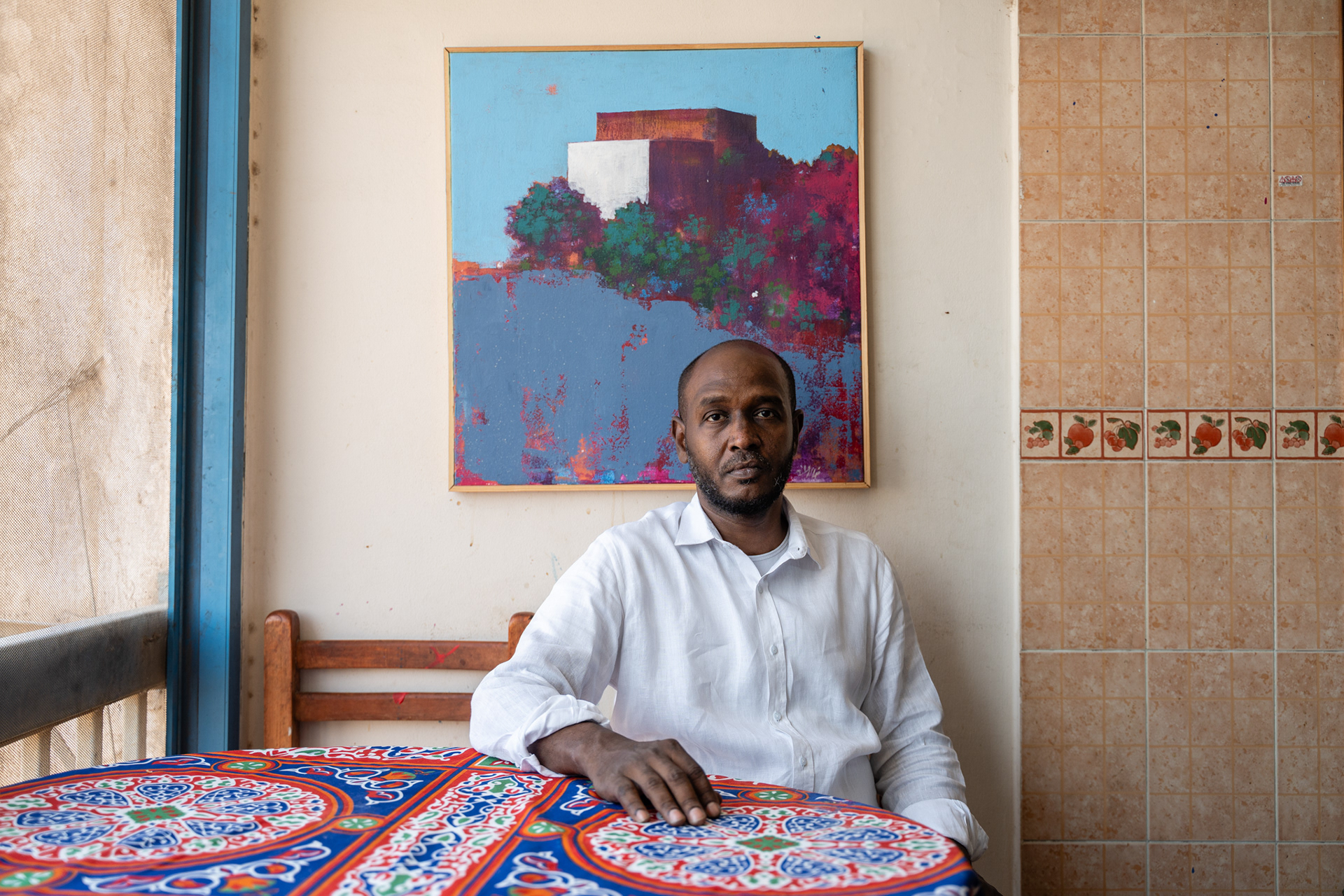
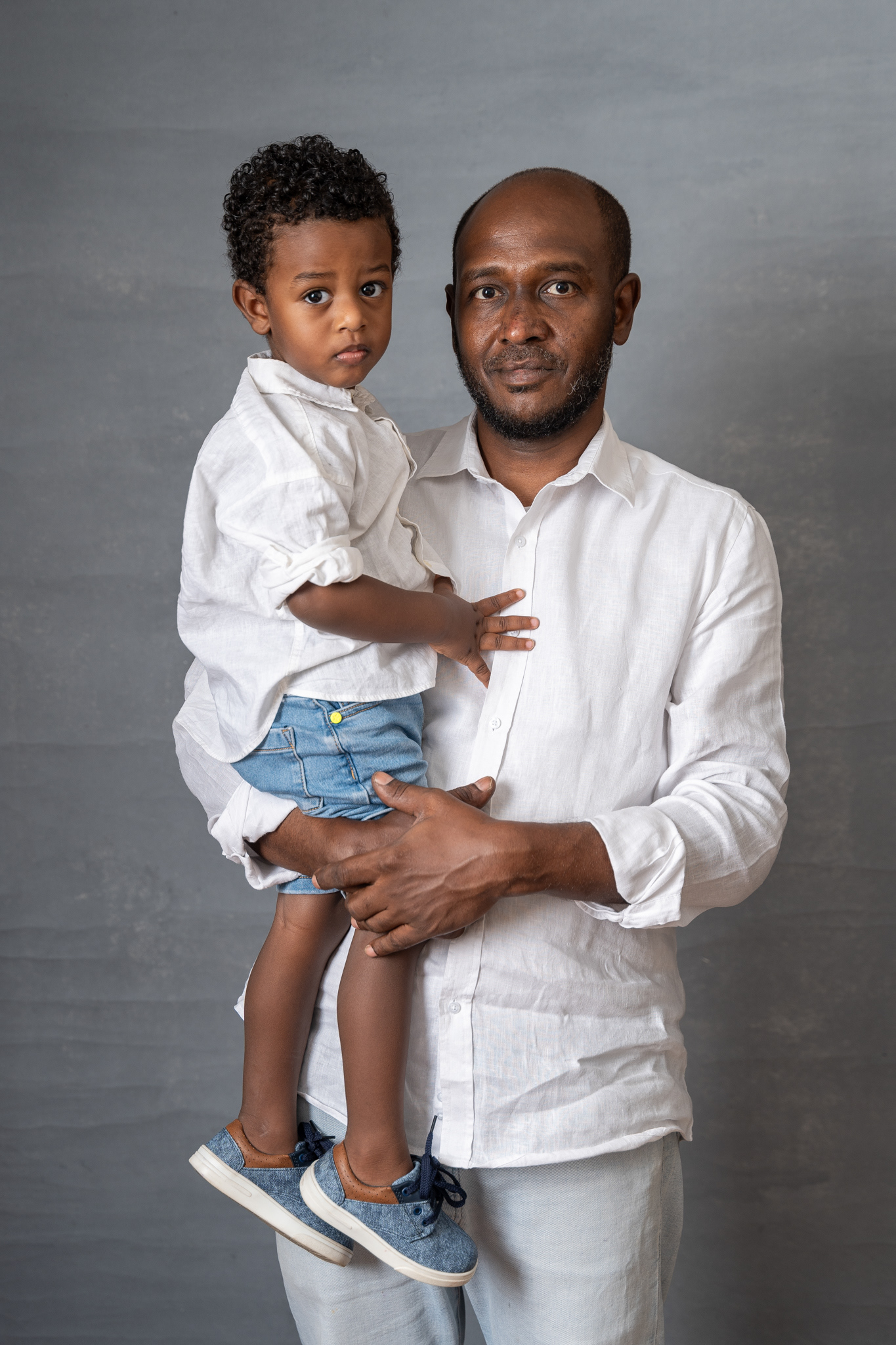
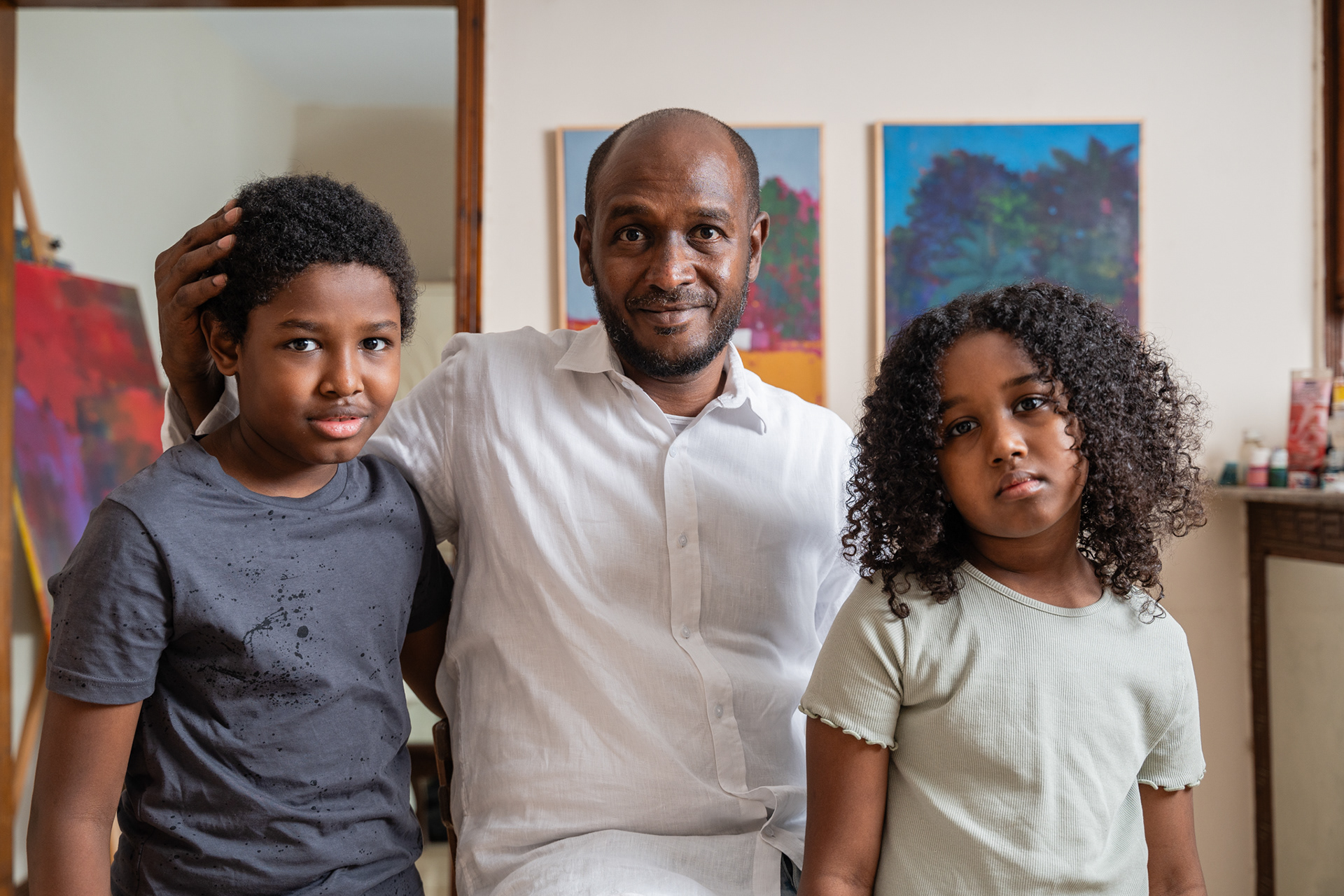
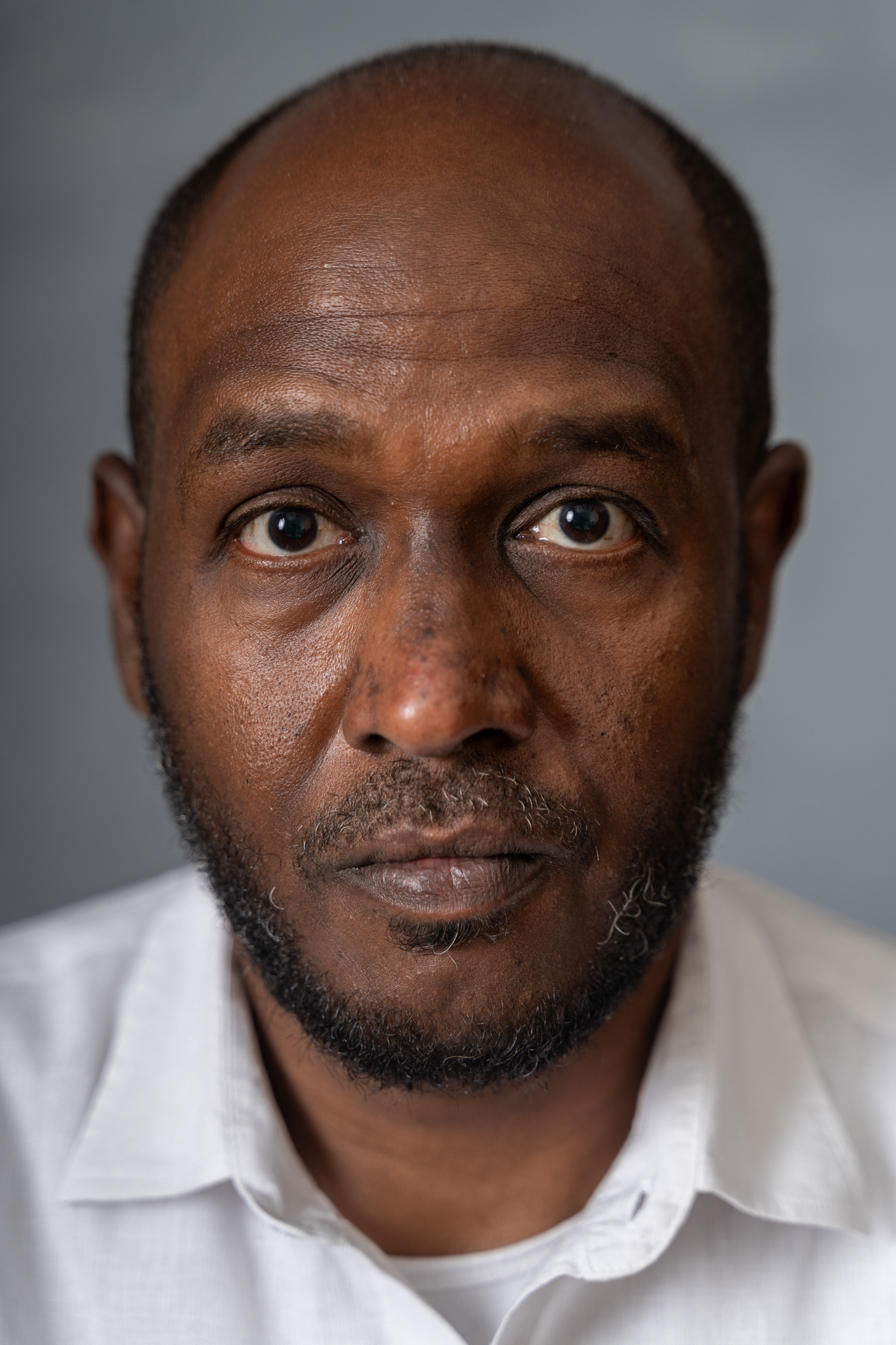
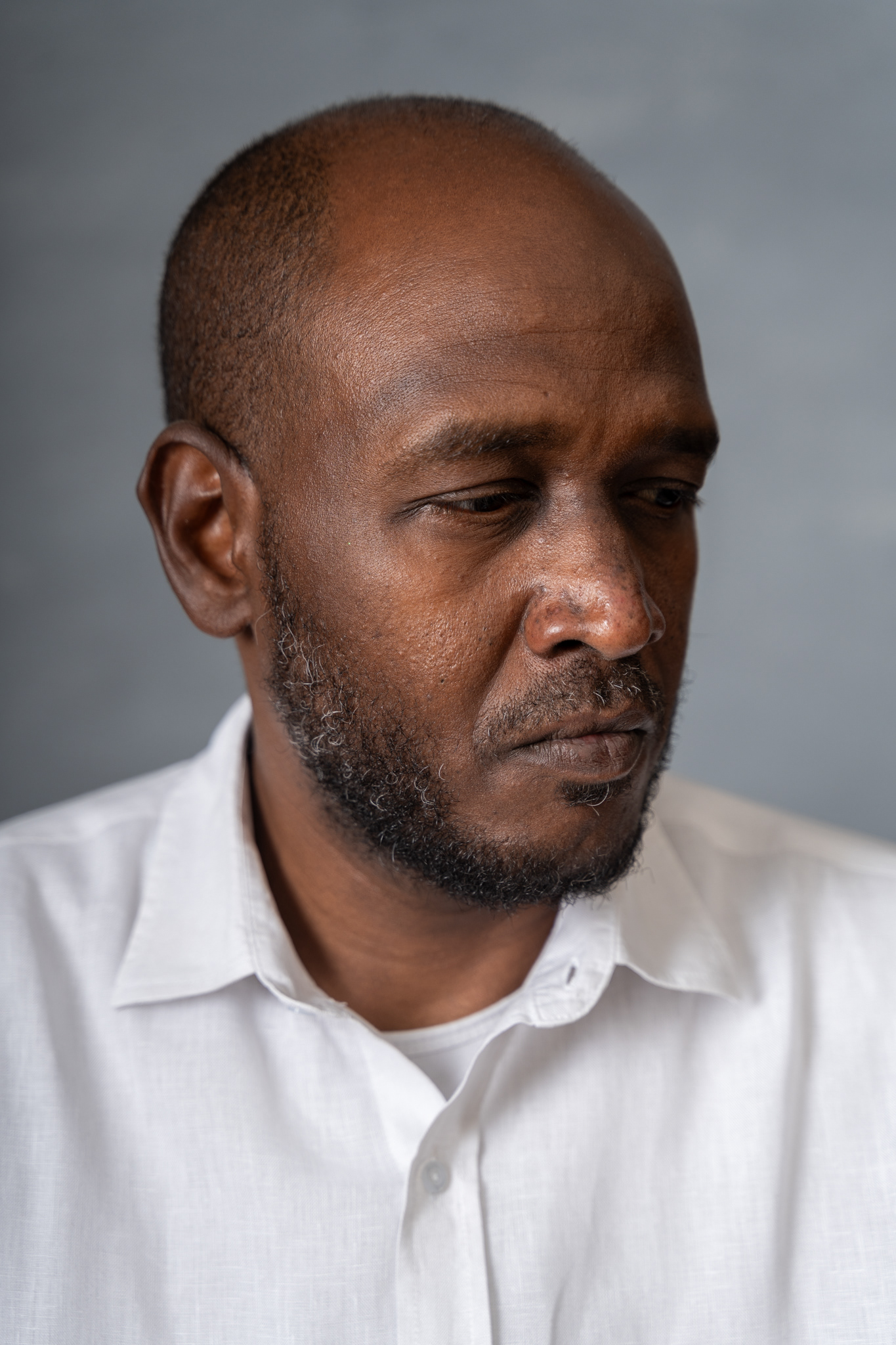
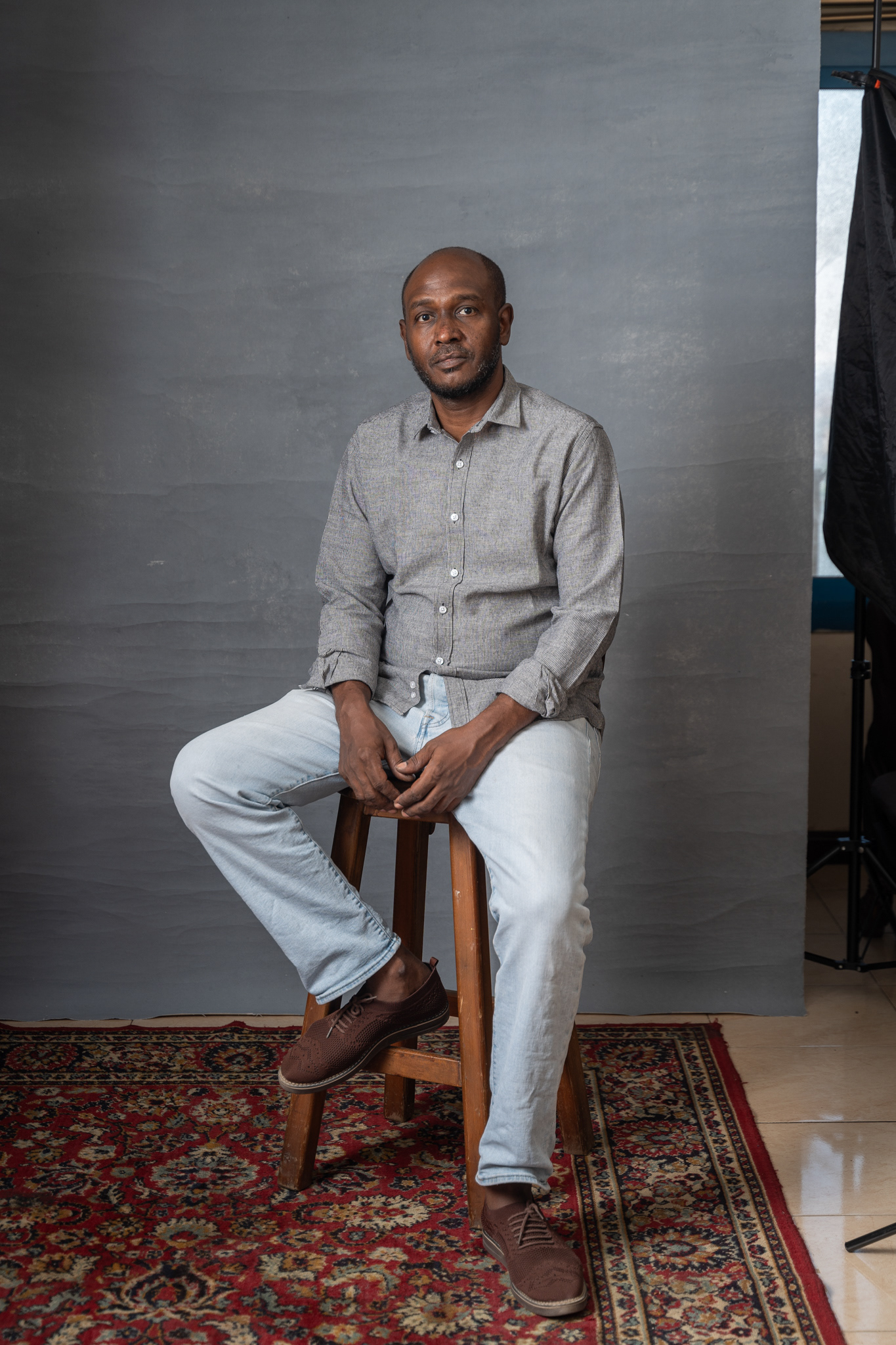
The portraits move between two worlds. Some isolate him against plain walls where nothing distracts from the years written across his face. Others place him among the paintings, surrounded by fragments of Khartoum that continue to exist because he refuses to let them disappear. Together they reveal not only a painter, but a man preserving a relationship with home through the simple act of continuing to paint.
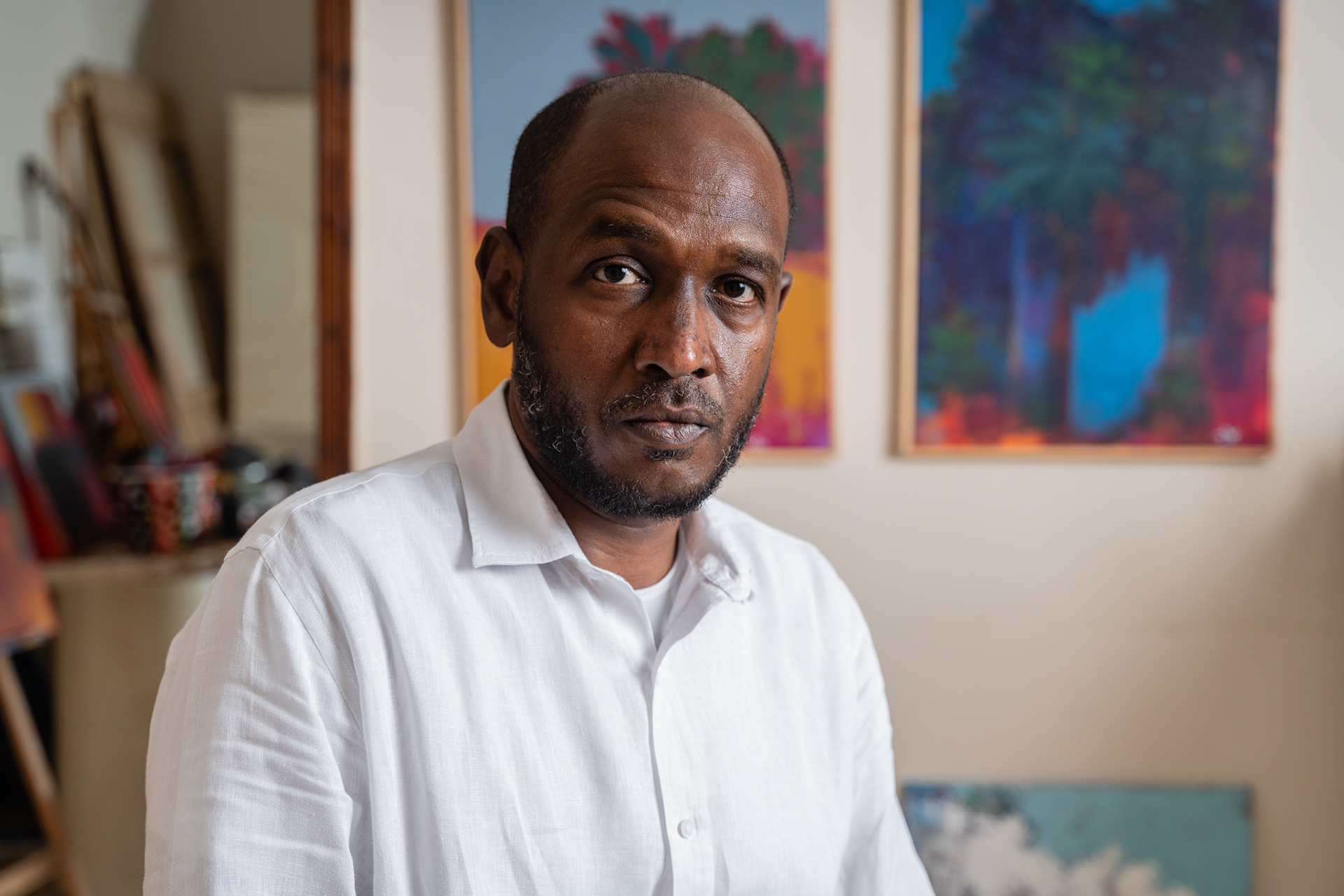
People often think exile is defined by what is left behind. Sitting with Khalid, it felt defined by what people choose to carry. His city survives in colour. His memory survives in paint. These portraits are not about displacement. They are about the quiet determination to keep looking at home with what Khalid calls "the good eye"—finding beauty in the ordinary, even when the ordinary has become impossible to return to.
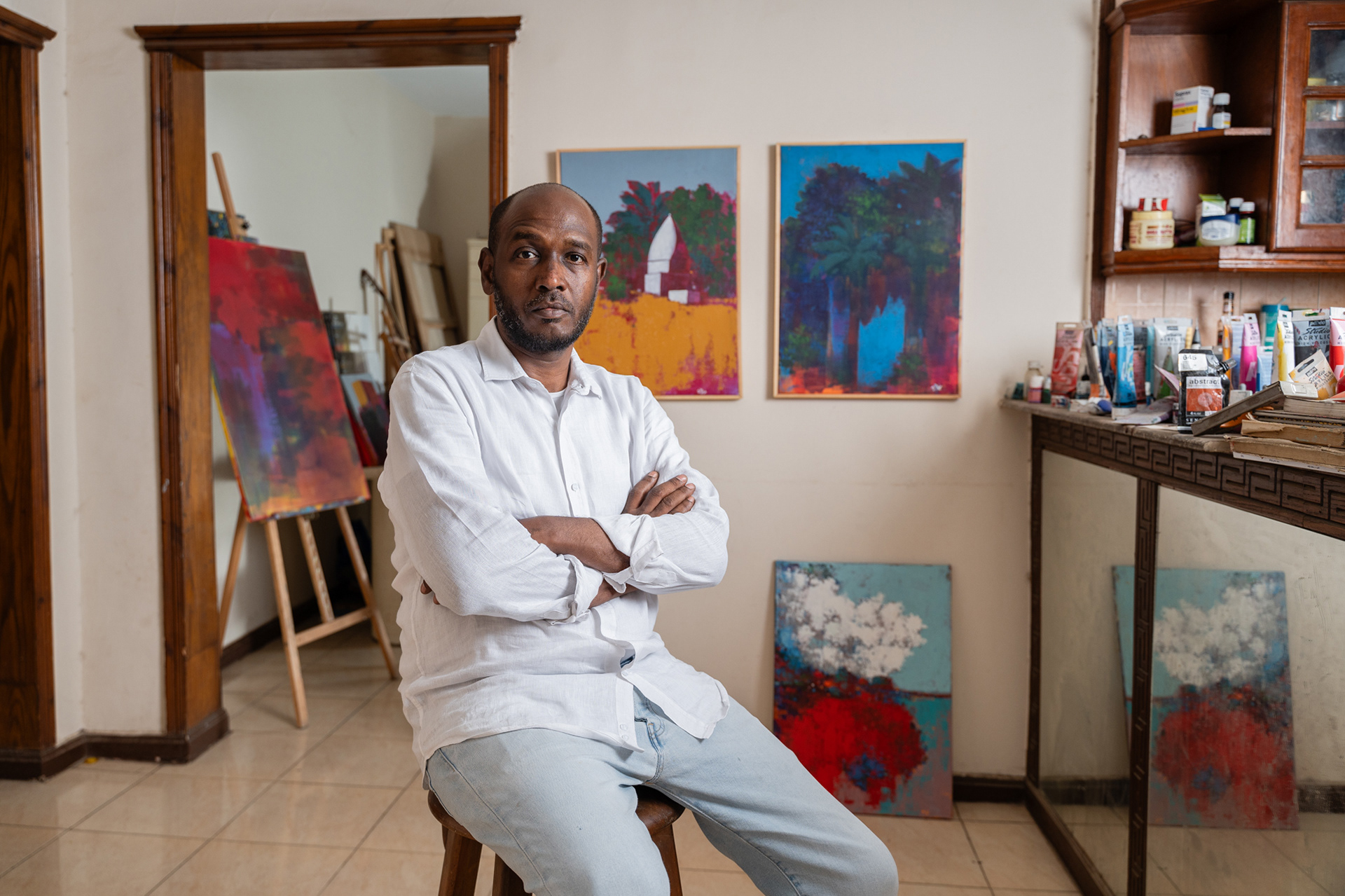
"I always think of my artistic work as an extension of the local Sufi poetic tradition that values the eye of contentment, the good eye that sees beauty in everything." Khalid Abdelrahman